Scorfidon Protocol
Floral and Pollinator Ecosystem Threat Assessment System
"The narrative universe and the scientific universe share the same name because they represent exactly the same reality."
Canonical Document — Internal Use Only
This document establishes the official definition, architecture and application criteria of the Scorfidon Protocol within the scientific ecosystem of the Nahiara Universe. No factor, scale or rule may be modified without the express authorisation of Uno (Matías Octavio González).
Definition and Nature of the Protocol
Ecosystem-Scale Assessment
The Scorfidon Protocol is the official system for assessing active and physical threats to a floral and pollinator ecosystem — measuring destructive forces operating at the level of a territory, habitat or geographical zone.
It complements the Nahiara Measure (species level) and the Araihan Measure (pollinator level). Together, the three systems form the complete health diagnostic of the floral ecosystem.
Foundational Principle
Scorfidon is not only the name of the narrative antagonist. It is also the acronym for the nine real, active and measurable forces that threaten floral ecosystems on the planet.
This alignment between fiction and science is one of the fundamental architectural principles of the project — the narrative universe and the scientific universe share the same name because they represent the same reality.
The S·C·O·R·F·I·D·O·N Acronym — Nine Factors
Each letter corresponds to a real, verifiable and scientifically documented threat to floral ecosystems.
Overexploitation
Intensive and unsustainable extraction of natural resources — excessive harvesting, predatory collection, uncontrolled tourist pressure.
Contamination
Chemical, light or sound degradation — pesticides, herbicides, water and soil pollution.
Territorial Occupation
Urban encroachment and infrastructure that destroys or degrades the natural habitats of flowers and pollinators.
Residues
Plastics, agrochemicals, industrial and domestic waste that disrupt the natural cycles of the ecosystem.
Fragmentation
Rupture of ecological corridors that prevents the movement of pollinators and the dispersal of pollen between populations.
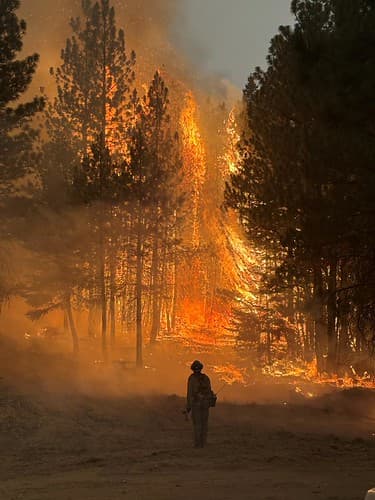
Intentional Fires
Deliberate or negligent burning that massively destroys plant matter, nests and pollinator habitats, with short-term irreversible effects.
Deforestation
Systematic felling, clearing and removal of plant cover that sustains the floral and pollinator ecosystem.
Obsolete Agriculture
Extensive monocultures, intensive use of systemic pesticides and loss of agricultural biodiversity that eliminates pollinator sustenance.
Nitrification
Excess nitrogen in the soil from artificial fertilisers that disrupts the nutritional balance and favours invasive species over native flora.
Scoring System
The factor is present but with limited and manageable impact. The ecosystem shows autonomous recovery capacity.
The factor is active with measurable impact on flowers or pollinators. Requires continuous monitoring and planned intervention.
The factor is operating at maximum intensity with structural damage to the ecosystem. Natural recovery is uncertain without external intervention.
Scorfidon Index Formula
SI = S + C + O + R + F + I + D + O + N
The Four Scorfidon Alert Levels
LATENT
9 – 13 pts
Ecosystem in relative equilibrium. Threats exist but have not reached critical mass. Preventive monitoring recommended.
EMERGING
14 – 18 pts
Detectable tension in the ecosystem. One or more factors have escalated. Active intervention recommended before the dynamic becomes entrenched.
ACTIVE
19 – 23 pts
Consolidated threat with measurable impact on flowers and pollinators. Urgent and coordinated action essential.
CRITICAL
24 – 27 pts
Scorfidon collapse. Point of no return approaching. Emergency intervention and possible activation of international conservation protocols.
Scorfidon Protocol vs. The Nameless
The Nahiara Universe recognises two fundamentally distinct categories of threat. This distinction is canonical and inviolable.
Canonical application rule: Ignorance, Indifference, Oblivion and Disconnection belong exclusively to the domain of The Nameless (Volume 2). They must never be included as Scorfidon Protocol factors under any circumstances.
Integration within the Scientific Ecosystem
Each protocol operates in a specific and complementary dimension — together forming the complete diagnostic of the floral and pollinator ecosystem.
Scorfidon Protocol (SI)
✦ Current pageEcosystem / territory
Active physical threats — range 9–27
Canonical Document v1.0 · March 2026
Editorial authority: Matías Octavio González (Uno) · Secretary and Creative Director
International Association for the Defence of Flowers · CIF: G72737570