North America
22/25
✅ Available
Natural
Interactive 3D Model
🖱️ Drag to rotate · Scroll to zoom · The model auto-rotates
Ecological health index (0–25)
About Ruby-throated Hummingbird
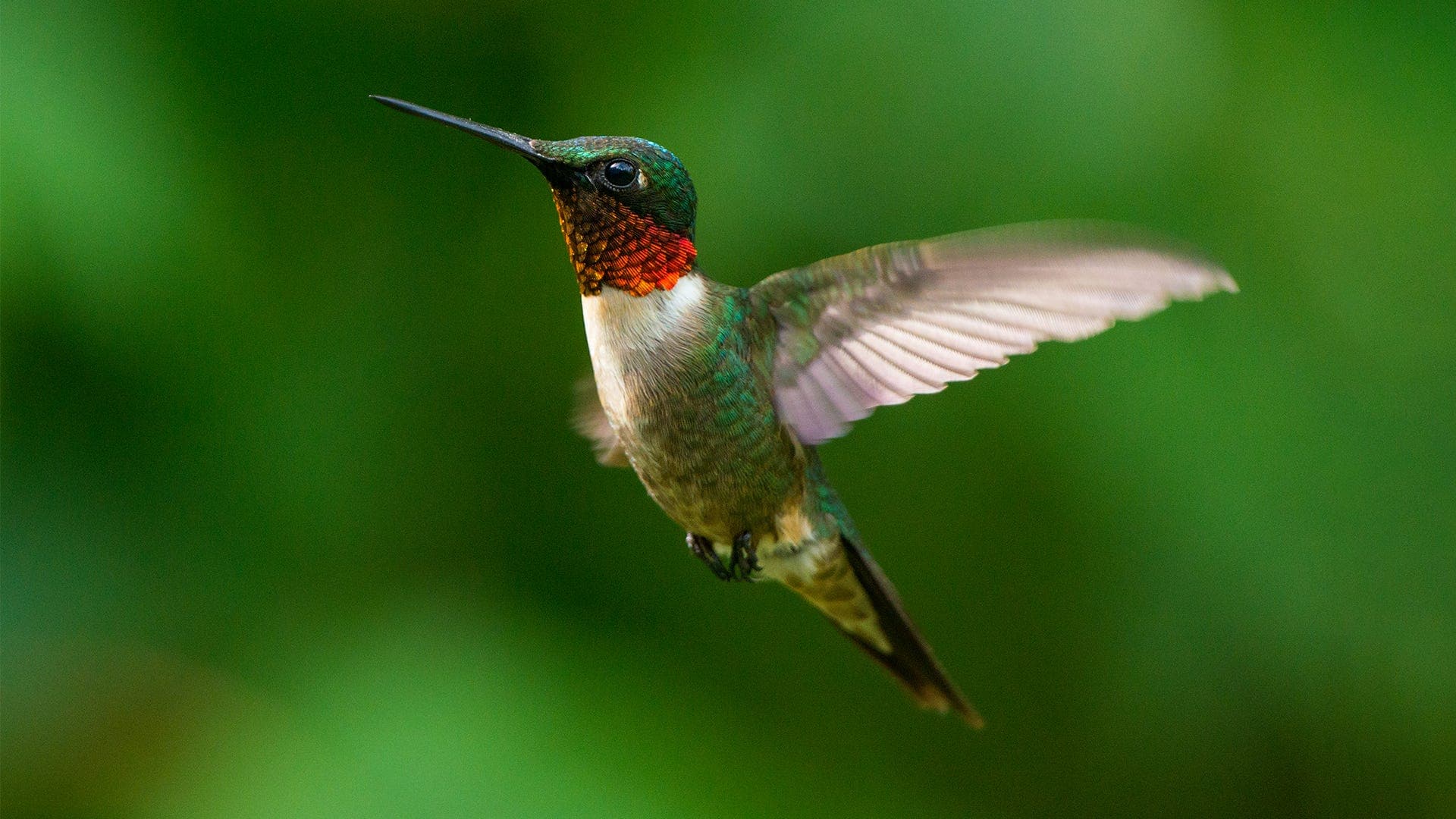
The Ruby-throated Hummingbird is the only breeding hummingbird species in eastern North America and one of nature's most remarkable aviators. Weighing just 3-4 grams, these tiny birds beat their wings 53 times per second, allowing them to hover in place, fly backwards, and even upside down — feats no other bird can match. Their long, specialized bill and extensible tongue (which can lick nectar at 13 times per second) make them perfectly adapted for tubular flowers like trumpet vine, cardinal flower, and bee balm. During migration, they make an incredible nonstop 800 km flight across the Gulf of Mexico. As pollinators, hummingbirds are especially important for red and orange tubular flowers that have co-evolved specifically to attract them, as these flowers often have no landing platform and produce copious nectar accessible only to long-billed visitors.
Habitat
Forests, gardens, and meadows throughout North America, especially areas with abundant nectar-producing flowers.
Conservation
While not currently endangered, habitat loss and climate change pose threats. Araihan Measure: 22 / 25 (Stable).
Did You Know?
They beat their wings 53 times per second
They can fly backwards and upside down — unique among birds
Their heart beats up to 1,260 times per minute during flight
They migrate 800 km nonstop across the Gulf of Mexico
They consume half their body weight in sugar daily!